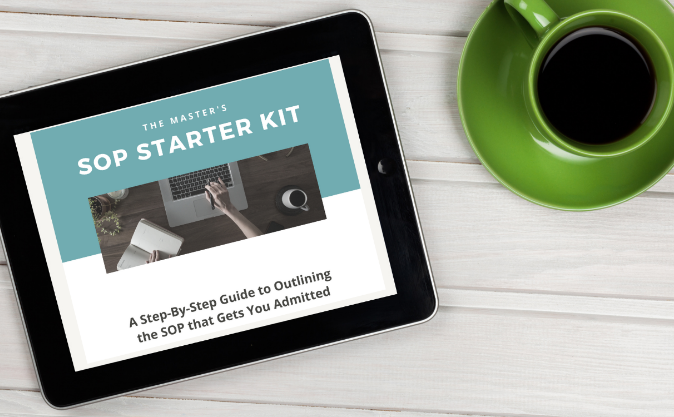
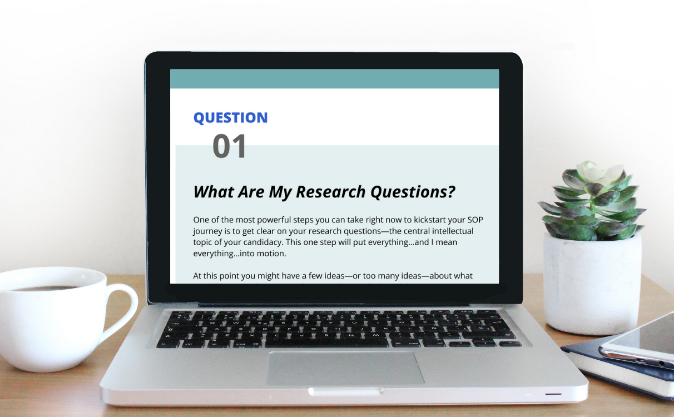
Free PDF: The 4 questions every great SOP answers → Master’s or PhD

Grad school applications are confusing by design. Let’s fix that.

We give Master’s and PhD applicants a step-by-step formula for writing the kind of SOP that grad schools actually want to read, that floods your inbox with admission offers, and that makes Impostor Syndrome disappear.

Grad school applications are confusing by design. Let’s fix that.​

We give Master’s and PhD applicants a step-by-step formula for writing the kind of SOP that grad schools actually want to read, that floods your inbox with admission offers, and that makes Impostor Syndrome disappear.

The SOP method that professors, journalists, and 100,000+ applicants trust.

Association of Writers & Writing Programs
Authority Magazine
The Muse Logo

Most grad admissions advice is vague and contradictory, and the worst of it comes from the committee itself. Faculty can tell you what they like, but almost none of them can tell you how spectacular essays are actually written.

You’ve probably already found a dozen blog posts that told you to “tell your story” and “show your motivation” — without explaining what that means or how to do it. You’ve read sample essays that felt impossible to imitate. You’ve stared at a blank page wondering if you’re just not the kind of person who gets into these programs.

You are. You just don't have a formula yet.

The SOP Formula:

Write the Essay That Makes Them Choose You

Choose your path. We’ll handle the rest.

Master’s SOP Formula

Everything you need to write a Master’s statement of purpose that makes admissions committees stop, smile, and reach for the acceptance pile. Built around the same hero’s journey structure that hundreds of our students have used to get into programs at Harvard, Stanford, Oxford, and beyond.

PhD SOP Formula

A research-grade formula for writing a doctoral statement of purpose that shows you think like a scholar, and makes faculty advisors want you in their lab. The same framework that some of the most prestigious schools on the planet have recommended to their own applicants, linked to from their own websites, and endorsed without ever being asked.

They were exactly where you are.

Stanford. Harvard. Harvard‑MIT. Admitted to all three.

“I had a somewhat unconventional undergraduate experience and did not find my university’s career resources particularly helpful. I applied to Stanford Biophysics, Harvard Biophysics, and Harvard-MIT Medical Engineering — and was admitted to all three. I’ll be attending Stanford on a graduate fellowship.”

Alice L. — PhD Biophysics

12 admissions. CMU. Michigan. UCLA. Columbia. UT Austin.

“WriteIvy gave me the confidence to write my own essay with certainty — following a thoroughly researched, proven formula that has no doubt worked hundreds of times.”

Roy T. — MS Electrical Engineering

This helped me get into Duke's Nicholas School of the Environment.

“I had no clue where to start. The course broke it down into pieces that made the whole process so much less overwhelming — and helped me clarify exactly what I wanted from my degree.”

Skylar V. — MS Environmental Management

I know what it’s like to stare at your applications and feel hopeless.

Before WriteIvy, I was rejected from 9 out of 10 graduate programs. Not because I wasn’t qualified, but because no one ever told me what admissions committees were actually looking for.

Once I figured it out for myself, I built a system out of it, taught it to hundreds of international students, and celebrated as they got accepted to programs their advisors said were way out of reach.

That system is what I teach here.

Not ready to commit? Start here for free.

Download the SOP Starter Kit and you’ll have a strong first draft within hours – not weeks. Join 100,000+ Master’s and PhD applicants who started exactly here.

"I had a lower GPA and applied to just one program. The free resources gave me everything I needed to feel confident enough to do that."

The WriteIvy Blog

Cut-and-paste templates, sample essays, and interviews from real students who got in. We don’t publish vague, wishy-washy tips that leave everything up to interpretation. We publish the explanations that make you say “oh, that’s how this works.”

Your GPA is set. Your CV is set. Your research experience is what it is.

The statement of purpose is the one part of your application you still control.

Most applicants have no idea what it’s actually supposed to say. And it shows.

But over and over, our students have earned admission to top programs – with full funding – despite GPAs that looked disqualifying on paper, research experience that felt thin, and timelines that started embarrassingly late. The right SOP changes the math entirely. Our past students will tell you this themselves.